European family holding companies

Sometimes we search for individual investments when great investors are being ignored right at our doorsteps.  Berkshire Hathaway is the granddaddy of them all but there are quite a few mini-Berkshires.  In North America, most value investors are familiar with Leucadia, Loews, Danaher, Platform Specialty Products but interestingly enough, there are a number of publicly listed European holding companies that wealthy European families use for their investments.

Pargesa Holdings (Belgium — Baron Albert Frere;  Canada — Paul Desmarais)

Pargesa is a holding company formed by Albert Frere and Paul Desmarais in 1981. The company has a unique background in that it was formed  to avoid the nationalization of Paribas by the newly elected socialist president Francois Mitterand. The holdings are displayed in the chart below (see 2015 Pargesa Annual General Meeting ).
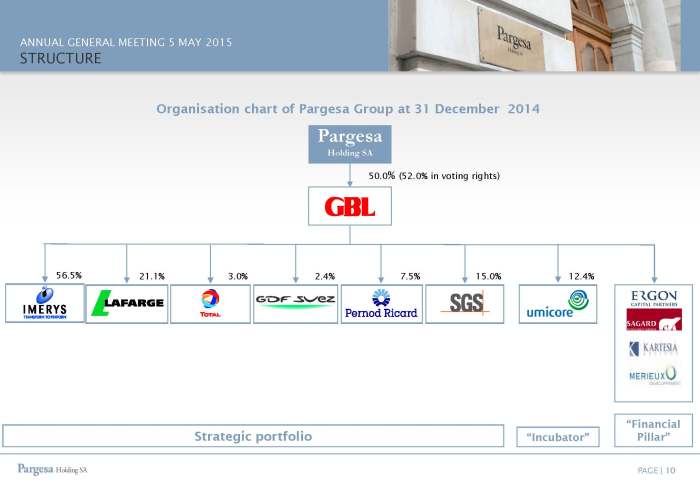
ag15en_Page_10

Interesting enough, the holding company has traded at a discount to NAV since the mid 2000s (see GBL stock price vs NAV ).

Pargesa, GBL & Power Corp of Canada

Billionaire Frere

Wendel (France — Wendel family)

Founded in the France in 1704, the Wendel Group developed its business over more than 300 years in diverse industrial sectors, mainly steelmaking. At the end of the 1970s, the French government nationalized all of their steel production activities. Wendel, a pioneer in private equity, then turned its focus to long-term investing.

History and background on the family & company can be found on their website.

 Wendel Group history

The holdings are displayed in the chart below ( see 2015 Wendel Group Investor Day ).
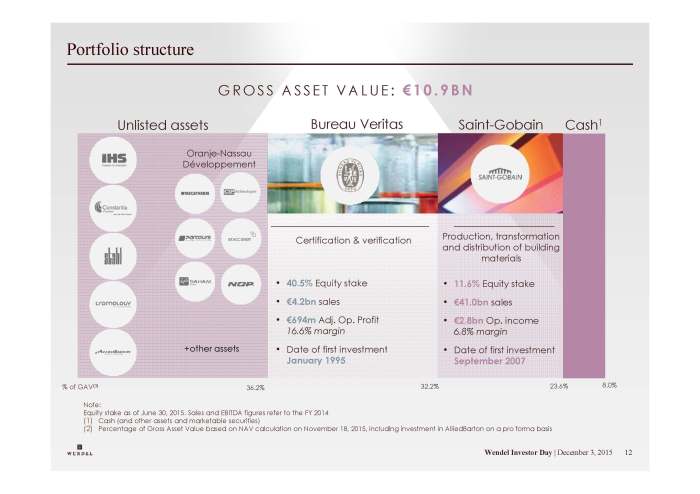
1_wendel_wendelid2015_jm_1_Page_12(Interesting side note for UK residents – Saint Gobain is the parent company of the large UK building supplier Jewson).

Unlike several other European family holding companies, the Wendel Group has a significant allocation to unlisted (private) companies.
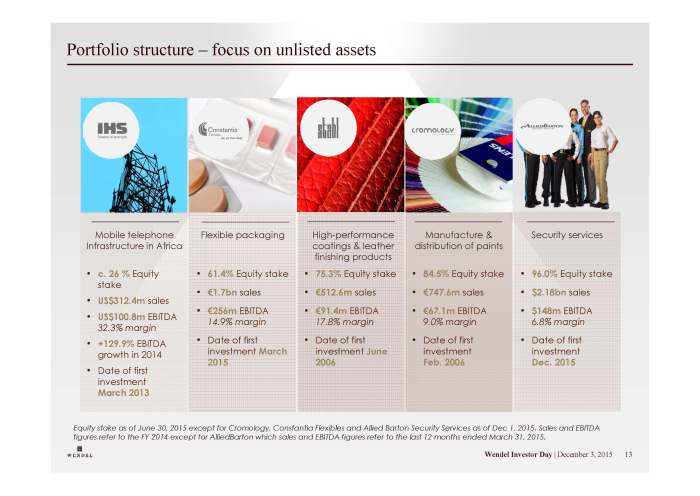
1_wendel_wendelid2015_jm_1_Page_13

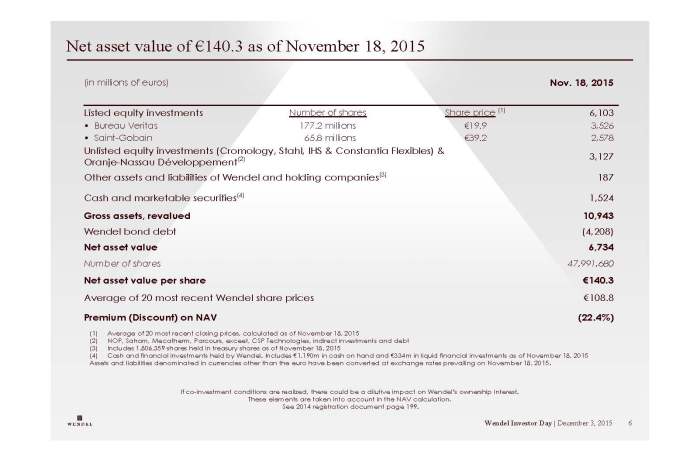
Similar to Pargesa, the Wendel Group trades at a discount to NAV (see Wendel Group – stock vs NAV ).
1_wendel_wendelid2015_jm_1_Page_06Exor (Italy — Agnelli family)

Exor is a holding company controlled by the Agnelli family that owns interests in the companies in the slide below.
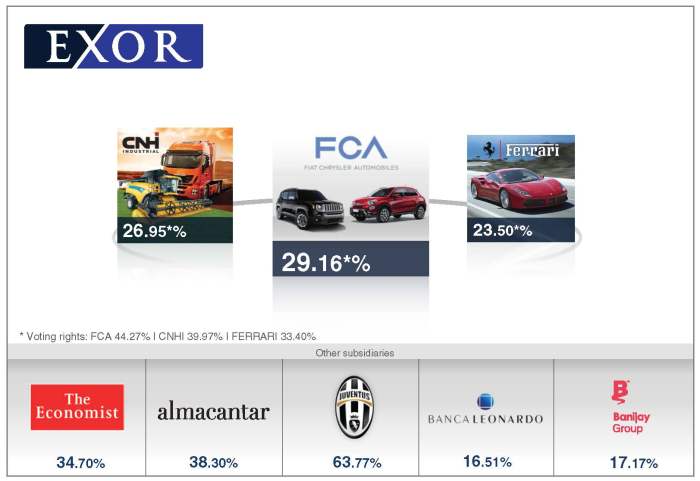
 

portafoglio_investimenti_en (1)

John Elkann, the Chairman and CEO, appears to be building an Italian Berkshire Hathaway with his investing style.  He even pens a genuine letter to his shareholders 2014 Letter to shareholders

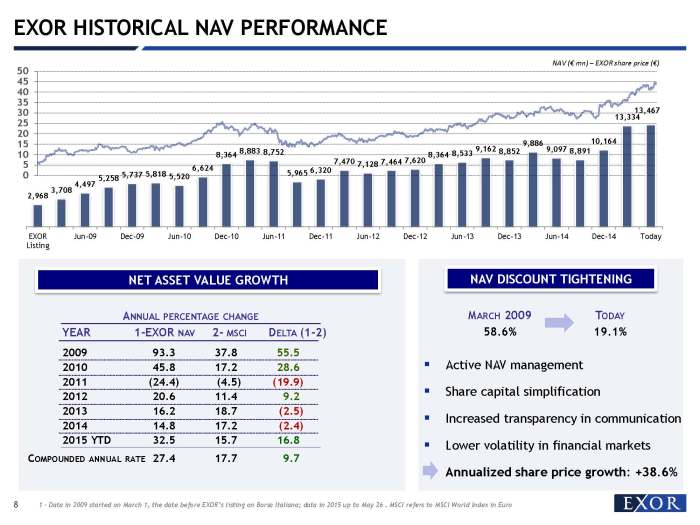
Once again, the holding company trades at a discount to NAV. I believe the discount is now circa 15% using NAV data as of Sep 2015. Here’s a slide of the stock & NAV performance as of May 2015 (See  May 2015 Investor Call ).May29 ConfCall FINAL (3)_Page_08
Investor AB (Sweden — Wallenberg family )

Founded by the Wallenberg family a hundred years ago, Investor is the leading owner of high quality Nordic-based international companies. Investor was founded 1916 and spun out of Stockholms Enskilda Bank.  From 1916 to the early 1970s, Investor was part of Stockholms Enskilda Bank, which had been managed by the Wallenberg family ever since the bank was founded in 1856. Later, Investor gradually developed into a holding company with independent operations. .

Today, they have diverse holdings in leading Nordic companies ( 2015 Investor AB presentation ). In many cases they are the largest shareholder of the listed company.
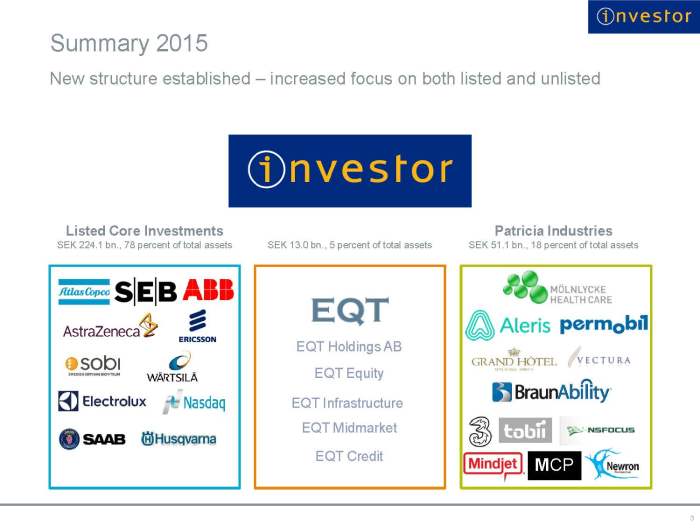
investor_year-end_2015_presentation_Page_03

2015 Year end report

Wallenberg family

Investor AB & Wallenberg family

Once again this trades at a discount to NAV as well. Some people may argue that the dual share class structure with Investor AB is the source for some of the discount.

Summary

One could argue that investing in such holding companies is a lazy way to invest but I have no problem  conceding that these firms excel at creating shareholder value over generations. Whether or not one invests, one can certainly learn something from watching and analyzing their investment approach.


WL Ross Holding Corp.

Wilbur Ross has a Special Purpose Acquisition Corp (“SPAC”) set to expire this year if he doesn’t do a deal in H1 2016.  The units trade under WLRH, warrants under WLRHW and the units + 1/2 a share of warrants under WLRHU.

Here’s some background & analysis on the SPAC

Wilbur Ross SPAC

WL Ross Holding Company

& the original prospectus

SEC filing

Like most SPACs, if there is no deal, your money is returned. At the moment, the cash value is close to $10 which is exactly where the WLRH units have been trading. So worst case, you get your money back + a refund of the underwriting fees (unusual but good). Best case, Wilbur Ross does something clever in the energy sector and it’s worth more…… Dare I say, a cheap option?

Fromageries Bel, Lactalis & Parmalat

I stumbled upon a few interesting European cheese/dairy companies which piqued my interest in the industry and their businesses. The companies are Lactalis Group (“Lactalis”), Fromageries Bel (“Bel”) and Parmalat.  They are three separate companies with some overlap in shareholder ownership.

Fromageries Bel

Fromageries Bel is France’s third largest pure cheese producer after Lactalis (formerly Besnier) and Bongrain.  Together these three companies produce more than half of the total cheese sales in France, a country with the highest per capita consumption in the world.  You may not be familiar with Bel as a company but you are most likely familiar with their five core products – Mini Babybel®, Boursin®, Kiri®, Leerdammer®, & the Laughing Cow®.


Family business & history

The company was founded in 1865 by Jules Bel in France’s Jura region near the Swiss border. Jules Bel was joined and then succeeded by his son Léon Bel. The younger Bel was responsible for developing and registering a trademark for the Laughing Cow® cheese in 1921. In the 1930s, Léon Bel was joined by his son in law Robert Fiévet and appointed CEO in 1937. If Léon Bel had succeeded in establishing the Laughing Cow ® as successful product, Fiévet would build the company into one of the top three cheese producers in France. Then, in the 1950s their attention moved toward expansion. They reorganized, moved their headquarters to Paris and listed on the Paris Stock Exchange. By the late 1970s, a new generation entered the family-owned business, with the appointment of Bertrand Dufort, Fiévet’s son-in-law. In 1981 the company simplified its current name, to Fromageries Bel.

Interestingly enough, Bel was not alone as a market leader in the French cheese market. Another group, Besnier (today known as Lactalis), was aggressively expanding and consolidating the French dairy industry. Besnier was a private company wholly owned by the Besnier family and led by Michael Besnier. Whereas Besnier and Bongrain had developed a strong presence in the molded cheese segment, Bel had a stronghold on the melted cheese market. In 1993, Besnier began purchasing shares in Bel. By the end of 1994, Besnier (Lactalis) owned 20 percent of Bel. Bel was an easy target but the acquisition never happened.  A separate family holding company, known today as Unibel, was set up in the 1920s and was Bel’s majority shareholder.

As of today, the shareholdings in Fromagerie Bel are as follows – Unibel & family 71% , Lactalis ( formerly Besnier) 24%, Treasury shares 1.5%, Other shareholders (free float) 3.5%. Yep, that’s right. Only 3.5% of the float is available and not locked up. We’ll come back to this point later.

Lactalis

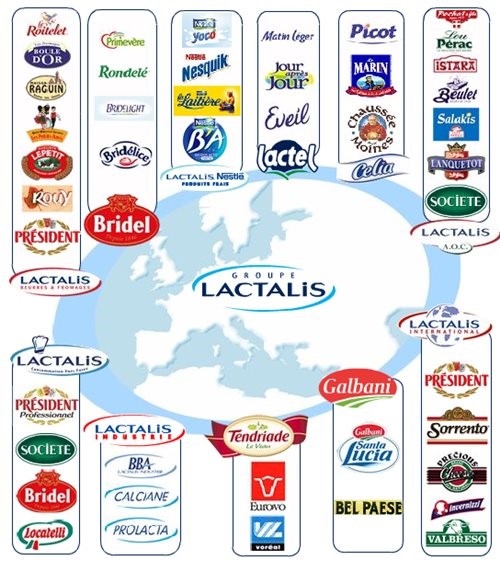
Groupe Lactalis, formerly known as Besnier, is France’s largest dairy products producer and one of the largest cheese manufacturers in the world. It ranks second in the global dairy market, after Nestle. Whereas you may never heard of the company, you will most likely be familiar with the company’s renowned President label and other brands such as Sorrento, Rondele, etc.  Lactalis is a private company 100% owned by the Besnier family.

Lactalis

Family business & history

Besnier S.A., today known as Lactalis, was founded in 1933 by Andre Besnier in Laval, in the Loire Valley region of France. Besnier remained a small, single factory operation well into the 1960s. Andre’s son, Michel Besnier, took over operations in the late 1950s with a goal to expand its operations to multiple plants and diversify the company’s dairy products. As a first step, Besnier created its own brand, the famous President Camembert label, in 1968. From the next year onwards, Michel Besnier pursued a series of acquisitions through the 1970s, 1980s, 1990s, and 2000s which catapulted the private company into the 2nd largest dairy company in the world.

http://www.lactalis.fr/english/groupe/historique.htm

Parmalat

Parmalat was founded by Calisto Tanzi in 1963 in Italy. From the start, the business pursued the expansion of new milk products which led to their flagship product – milk pasteurized at ultra-high temperatures. This was revolutionary at the time because it maintained an unrefrigerated shelf life that exceeded six months before opening. Parmalat expanded from such humble beginnings to become a large multinational firm in the late 1990s, becoming the largest Italian food company and fourth largest in Europe at the time.

Unfortunately, an accounting scandal of epic proportions was discovered in 2003 leading to Parmalat’s bankruptcy.  A new Parmalat was listed on the Italian stock exchange in October 2005.

In 2011, Lactalis bought an additional 54% of Parmalat. This took Lactalis stake in the publicly listed company to 83.3% after accounting for the 29% of the company already owned before the additional acquisition.  This means only 16.7% of the common equity is freely available. We’ll come back to this point later.

Investment thesis

I purchased shares in Fromageries Bel for the following reasons.

Financials

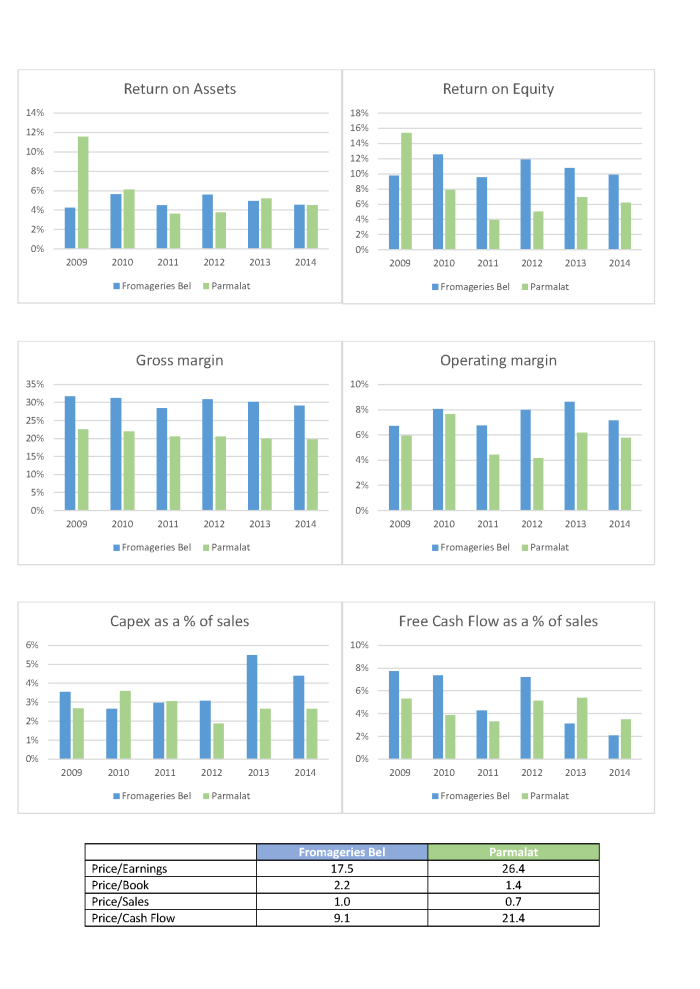
  • Their financials are decent. Here’s a decent CFA Society writeup on the company.
  • Solid cash flow generation allows the company to finance capital expenditures with internal financing.
  • Demonstrated long term track record of performance – delivering quality products & strong financials.

Favorable backdrop

  • Lactalis under the Besnier family appear to be an Outsider like firm which excels at acquisition and consolidation in the dairy industry.
  • Of the companies owned by Lactalis, I believe only Fromageries Bel and Parmalat are publicly listed equities but not wholly owned.
  • There is the potential for the shares not in the controlling shareholder’s hands, Lactalis’ hands, to eventually be bought out or tendered for to gain 100% ownership.

Why Fromageries Bel and not Parmalat?

I believe the incentives are better aligned in Fromageries Bel. I am working under the assumption that since Lactalis, a direct competitor, has a 24% stake in Fromageries Bel it would be hard for the Bel family or Fromageries Bel’s management to get away with any shenanigans. This counterbalance does not seem to exist amongst the shareholdings of Parmalat.

Cheese financials